
For people living with a dementia or more complex cognitive and emotional needs, the environment around them can significantly influence how they feel, communicate and experience daily life. Noise levels, lighting, colour, layout, activity, smells and familiarity all shape how a person responds to the world around them, particularly as verbal communication becomes more difficult.
Within dementia and social care, there is increasing recognition that the environment is not simply the backdrop to care delivery, but an active part of it. More providers are rethinking how care settings are designed and adapted to support orientation, reduce distress, encourage meaningful engagement and help people maintain a sense of identity and familiarity.
This shift reflects a broader movement away from institutional models of care and toward approaches that are more person-led, sensory-aware and grounded in continuation of life.
Moving Away from Institutional Models of Care
Historically, care environments were often built primarily around operational efficiency and risk management. In many settings, this resulted in spaces that could feel clinical, overstimulating or disorientating for people living with dementia or cognitive impairment. Long institutional-style corridors, centralised routines, bright clinical lighting and limited access to meaningful occupation were common features across many settings. Within more household-style models of care, such as the model at Heanton Nursing Home, language and environment are often considered together; spaces may be referred to as hallways rather than corridors, reflecting a move away from clinical, institutional design towards environments intended to feel more familiar and reflective of everyday home life.
While these environments may have supported oversight and task-based care delivery, they did not always support the emotional and psychological wellbeing of people living with a dementia.
Behaviour as Communication
Research and practice within dementia care increasingly recognise that behaviour is often a form of communication rather than something to be controlled. Distress, agitation, repetitive movement, withdrawal or attempts to leave a building may all represent an unmet need, confusion, fear, boredom, or a loss of familiarity and purpose.
The work of Thomas Kitwood helped shape modern person-centred dementia care by emphasising the importance of identity, attachment, inclusion, occupation and comfort. This philosophy continues to influence many care providers today, particularly as the sector supports increasing numbers of people living with more complex presentations of dementia alongside mental health conditions, neurological conditions and behaviours that may previously have resulted in placement breakdowns.
Guidance from the National Institute for Health and Care Excellence also supports non-pharmacological approaches as a first response to distress wherever possible, recognising the importance of understanding what may sit behind a person’s behaviour rather than relying solely on medication-based interventions. This is an approach strongly reflected within the philosophy at North Devon nursing home.
For care providers, this often means reconsidering not only how care is delivered, but how environments themselves may either contribute to or reduce distress.
The Yellow Wall
In practice, relatively small environmental changes can have a significant impact. Colour, for example, can support orientation and recognition. Contrasting doors, memory points, personalised bedrooms and familiar objects help to navigate surroundings. Reducing excessive noise and creating household-style living areas can lessen sensory overload, while access to gardens, natural light and purposeful occupation supports emotional wellbeing.
The team at Heanton Nursing Home supports people living with dementia and more complex cognitive and emotional needs, the impact environmental changes can have became particularly evident through something as seemingly simple as the colour yellow.
One gentleman living at the home has always loved the colour yellow. During time spent outside in the garden, he expressed that he wanted to paint a wall yellow. Rather than dismissing the idea or viewing it as impractical or costly, the team supported him to do it.
Paint and brushes were bought, and the team supported him to lead the project himself, painting the wall with encouragement from those around him. Being involved gave him a sense of independence and purpose, helping him reconnect with his environment while reducing some of the frustration and distress he had previously experienced at other placements.
What initially appeared to be a simple decorating hobby quickly became something far more important. There was visible purpose in what he was doing. He was not being occupied for the sake of it; he was actively engaged in something that reflected identity.
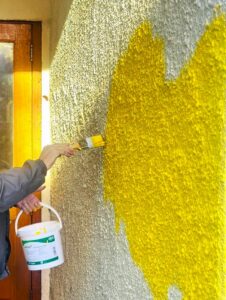
He also decided he wanted more yellow and chose to paint his bedroom door as well! Importantly, the team felt empowered to support this without needing to seek permission. Their training and autonomy allowed them to respond in a person-led way, recognising the value the experience held for him rather than focusing on restriction or task-based care. This reflects the importance of bespoke social care training that supports teams to think beyond process alone and confidently respond to the individual person in front of them.
The door later became an important orientation point for him and at times when confusion increased, the bright yellow door helped him identify his room more independently.
While simple, the adaptation reflected key principles within dementia care: identity, purpose and supportive design over control.

Abigail Denford, Home Manager, said: “Environment can have a huge impact on how someone experiences their day. Small details that may not appear significant to others can help reduce confusion and avoid unnecessary triggers and support a person to feel more independent and connected to who they are, ultimately resulting in a safer and more supportive environment.”
Increasing Complexity Across the Sector
For providers supporting people with complex needs, these approaches are no longer viewed as optional additions to care, but as an essential part of it.
Across the sector, homes are increasingly supporting people with needs once considered too complex for traditional residential environments. At the same time, there remains a shortage of care settings specifically equipped for more complex cognitive and behavioural needs. As people enter care later in life with increasingly advanced presentations, providers are under growing pressure to adapt environments, with some individuals moving between multiple homes or even out of county due to a lack of suitable placements.
Household Models
As a result, some providers are moving toward smaller household models and more adaptable living environments. Rather than expecting people to fit around the building, the environment is shaped around the person.
This may include sensory spaces, quieter lounges, activity kitchens, workshop areas, pet therapy spaces or environments designed around familiar routines and lifelong interests. These are not simply aesthetic additions, but considered ways of supporting continuation of life.
There can also be tension within the sector between creating highly polished, hotel-style environments and creating spaces that genuinely meet the needs of the person living there. While aesthetically impressive environments may appeal during viewings, they do not always reflect the realities of supporting people living with complex dementia, where familiarity, sensory understanding and meaningful occupation may be far more important to a person’s quality of life.
Sensory Environments
For people living with a dementia, sensory processing can change significantly over time. Environments that may appear ordinary to others can become overwhelming or confusing. Busy hallways, loud televisions, multiple conversations happening at once, reflective flooring, harsh lighting or constant movement can all contribute to sensory overload.
Smaller environmental details can also have a significant impact. Familiar objects, recognisable furniture, memory points and domestic-style spaces may help reduce feelings of institutionalisation while supporting orientation and comfort. For some people, engaging with sensory items or familiar routines can help relieve anxiety and provide grounding during periods of confusion.
Other areas within Heanton have also been designed around familiar experiences and everyday life. A small grocery store area allows people to browse shelves, handle items and engage in ordinary routines associated with shopping and independence. Nursery spaces and smaller activity areas encourage nurturing roles and opportunities for connection.
Reflecting a Person’s Life Within the Environment
Increasingly, this approach also involves reflecting the individual lives, occupations and identities of the people living within the home. If someone has spent much of their life farming, surrounded by animals, early mornings and outdoor work, providers are beginning to ask why environments should not reflect this too. Rather than expecting a person to leave behind the routines and experiences that shaped them, homes may look at ways of incorporating those familiar aspects of life back into the environment; whether through gardening, outdoor occupation or even introducing animals such as chickens into the grounds. In these situations, the role of the team is not simply to supervise the environment, but to help support and sustain it alongside the people living there. This can help create an environment and atmosphere of purpose and shared connection, not only for residents, but for the wider team supporting them as well.
Rebuilding Independence Through Environment
One lady living at Heanton had experienced a long and complex journey following health challenges and a misdiagnosis. After years of being misunderstood by services, she came to the home, where the team understood not only her needs, but who she was as a person.
Prior to arriving at the home, she had been supported within what had become an increasingly unreasonable care arrangement, as previous environments had struggled to meet her needs safely and consistently. This also raises wider questions around dignity and quality of life within complex care; how can a person truly live, regardless of condition or diagnosis, while being constantly observed by multiple people around the clock?
The environment around her was adapted to promote independence, familiarity and emotional safety. Two bedrooms were transformed into a private “granny-flat” style living space, giving her the safety she needed at a time when living alongside others had become increasingly difficult and distressing for her.
Within just seven days, the environment was created, she moved in and had one dedicated carer within the home who she was able to get to know, trust and build a meaningful relationship with.
With time, consistency and the right support, she gradually reconnected with her identity and independence. Today, she once again lives in her own home, leading a life built around choice, autonomy and freedom outside of formal care.
Training, Leadership and Organisational Culture
Rather than viewing risk avoidance as the primary measure of good care, many providers are increasingly balancing safety alongside autonomy, emotional wellbeing and quality of life. This can require a significant change in mindset particularly when supporting people whose communication or behaviour may appear unpredictable.
It also requires investment in team training and leadership. Understanding behaviour as communication relies heavily on observation, consistency and relationship-based care. Teams must feel confident identifying patterns, recognise triggers and respond flexibly to changing emotional needs.
Environmental approaches are therefore most effective when supported by a wider organisational culture that values a continuation of life.
This is particularly relevant as social care providers continue to face increasing complexity across the sector. Higher acuity, workforce pressures, hospital discharge challenges and limited specialist placements all place growing demands on care environments that were not necessarily designed with these needs in mind.
At the same time, expectations around quality of life within care settings continue to evolve. Families increasingly want reassurance that their loved ones will not simply be kept safe but supported to continue living recognisable lives.
The Future of Complex Dementia Care Environments
As the complexity of care needs continues to increase across the sector, environmental design will play an increasingly important role in how providers sustain placements, preserve dignity and create environments that can adapt around the person rather than expecting the person to adapt around the environment. While specialist design features and large refurbishments can be valuable, many of the most effective changes are often relatively small and deeply personal, shaped around understanding the individual rather than applying one standard model of care. This may also require a shift away from prioritising purely hotel-style environments toward creating spaces that genuinely reflect the realities, routines and emotional needs of the people living within them.
Sometimes, the most significant changes are not the largest or most expensive, but the ones that allow someone to remain connected to who they are.
In one case, that simply began with a yellow wall A Splash of Yellow: Making Heanton Feel Like Home – Heanton Nursing Home